Most of the photographs in a good diary are technically imperfect. They are slightly soft, a bit wonky, taken in a kitchen with the kettle steaming in the background and someone half out of frame. That is often exactly why they work.
The camera in your pocket is more than good enough for that. What separates a phone snap you forget about from an image you still like two years later is rarely the phone itself. It is where you stood, what the light was doing, and whether you bothered to take the picture at all.
Start With the Light, Not the Camera
Nearly every disappointing indoor phone photo is a light problem dressed up as a camera problem. In dim rooms the phone slows its shutter and boosts sensitivity to compensate, which is how you end up with blurred hands and grainy shadows. Look at the light before you look at the screen.
- Move towards the window. Daylight from the side is the single easiest improvement available to you, and it costs nothing.
- Turn your subject side-on to the light. Facing a window head-on flattens faces and squints eyes. Standing at an angle to it gives shape and softness.
- Switch off the overhead bulb if daylight is already doing the job. Mixing warm bulb light with cool window light leaves odd colour casts that are fiddly to fix later.
Overcast days are a gift. The whole sky becomes a softbox, and skin, wool, leaves and paint all look better for it. Harsh midday sun is the difficult one: move into open shade, or wait until later. The last hour before sunset and the first hour after sunrise are forgiving in a way that no filter can imitate, so if you can only take one photo today, take it then.
In the evening, resist the flash on faces. It flattens features and lights up the wall behind. Instead, move your subject near a lamp and let the darker corners stay dark — that gloom is part of the memory. If you can see the light source reflected in someone's glasses, shift your position until you cannot.
Composition You Can Judge in Three Seconds
Turn on the camera grid in your phone's settings and leave it on. It gives you two horizontal and two vertical lines, and a quick way to check a scene before you press the shutter.
Place the thing you care about on one of those lines rather than dead centre. Then get closer than feels natural — closer still. A photo of a whole cluttered table is a record of clutter; a photo of the mug, the book and the corner of a hand is a record of an afternoon. Do not use the zoom to achieve this. Pinch-zooming crops the image and softens it, so step forward instead, or bring the phone down to the level of what you are photographing. Kneel for children and dogs. Sit the phone on the table for a meal rather than hovering above it like a drone.
Before you press, scan the edges of the frame. Bins, plug sockets, a stranger's elbow and a bright patch of wall will pull attention away from the subject. A small step sideways usually removes them. If you are photographing a room, keep vertical lines vertical — doorframes and walls should run straight up the screen, not lean inwards. And use what is around you as a frame: a doorway, a window, the gap between two shelves, a branch.
What to Photograph on an Ordinary Day
Nothing has to be remarkable. The point of a diary is the texture of an ordinary week, and ordinary things photograph beautifully if you get close enough.
- The first cup of tea, with the light behind it
- Your walk to work, from the same spot each time
- The pile of shoes by the front door
- A page of your own handwriting, pen still resting on it
- The view from a bus or train window in the rain
- Someone mid-laugh, before they notice the phone
- Your desk at the end of the day, mess included
- The garden, the same plant, every fortnight
- A shopping list left on the kitchen counter
Three Habits That Sharpen Almost Every Shot
- Wipe the lens. Pocket lint and fingerprints cause haze, glare and a soft glow that looks like a fault. A shirt sleeve is enough.
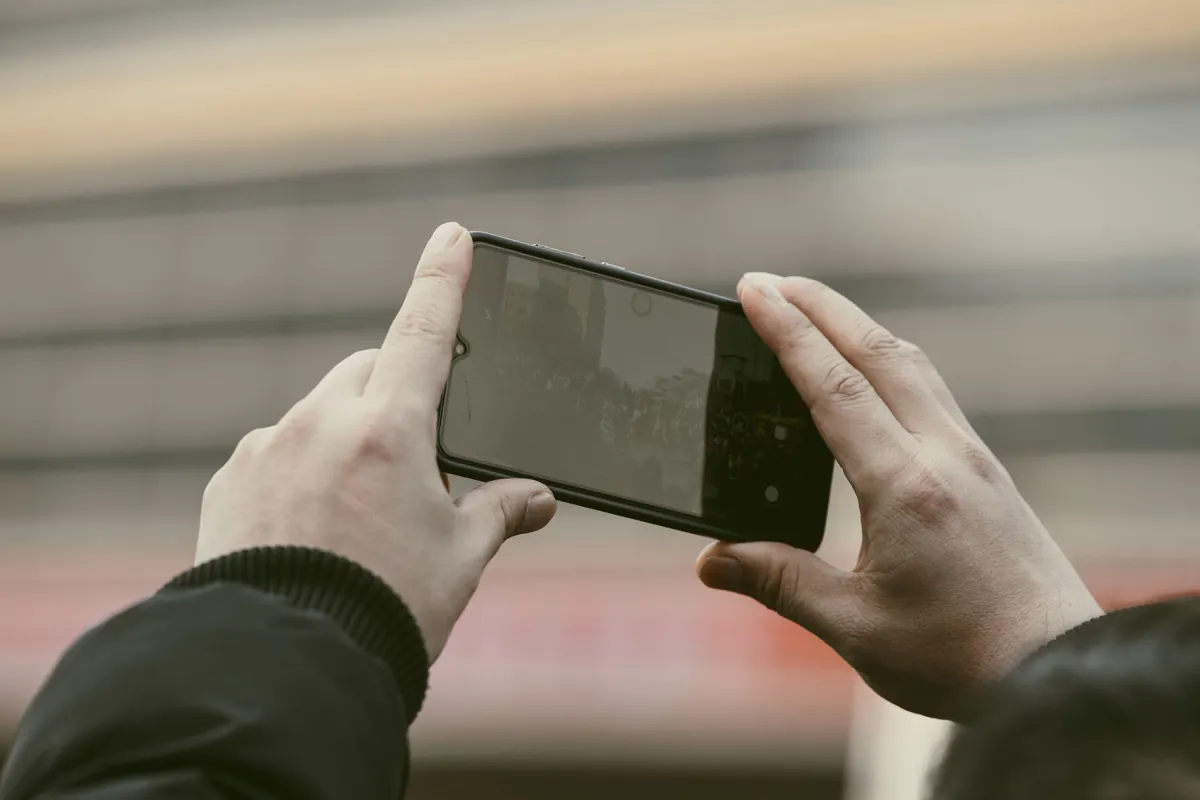
- Steady yourself before pressing. Both hands on the phone, elbows tucked in, feet planted, breathe out and then take the photo. Or lean your shoulder against a wall.
- Tap to focus, then drag the exposure slider. Tap on the face or the brightest part of the scene, then slide the sun icon down a little so highlights hold their detail instead of blowing out.
If you have time, take three frames: one wide, one closer, one from a different angle. The second is very often the one you keep. For group photos, use the timer so nobody is lunging at the shutter release, and take two — somebody always blinks in the first.
Edit Lightly, Then Stop
Editing should tidy a photo, not replace it. Start by cropping and straightening. Then adjust brightness, contrast, black point and warmth, in that order, and leave the rest alone. Most phone editing apps hide a hundred options behind a single image; you need about five of them.
Keep a consistent look across a month. If every photo has a different heavy filter, the diary reads as a series of adverts rather than a life. Skip the tape strips, fake sprocket holes and vintage overlays — they date quickly and cover up the detail you actually wanted. And keep the original file, because the photo of a messy kitchen will mean more in ten years than a tidied version ever could.
Make Them Easy to Find Again
A photo you cannot locate is a photo you no longer have. Back up your phone to a cloud account or your computer once a month, however dull that sounds. Sort pictures into one album per month and add a handful as you go rather than two hundred on the last evening. Give the folder a date, such as 2025-03, so it sorts itself.
Write something next to the pictures. Two sentences is plenty: what the day was, who was there, what annoyed you. In a diary, words and images carry each other, and a caption fixes a memory that a photo alone will slowly blur.
Print occasionally. A single 6x4 print on the fridge door does more for a diary habit than another folder on a phone, because you will see it every day and remember to keep going.
A Small Practice to Start This Week
For the next seven days, take three photos a day: one of a person, one of a place, one of a small detail. Keep them in a single album and change nothing about your routine to make them happen. On Sunday, look through the twenty-one images and add a line of writing to the one you like best. Do not delete the rest.
Consistency will do more for your diary than any equipment ever will. The photos do not need to be good in the way a portfolio is good. They need to be taken.
Photo: Suki Lee / Pexels