The photographs that will matter most in ten years are rarely the ones from the wedding, the holiday or the birthday cake. They are the Tuesday breakfast, the walk to the bus stop, the mug with the chipped rim, your friend mid-sentence with her hands in the air. Occasions photograph themselves. Ordinary days need a nudge.
What follows is a working checklist: the settings worth checking, the prompts worth keeping, and a few habits that turn a phone or a camera into an honest record of your own life. None of it needs expensive kit or a course. It needs five minutes of attention, fairly often.
Start with what you already do
Before settings, subject matter. The easiest photographic diary to keep is one built from things you would do anyway, rather than scenes you invent in order to photograph them. Sit down with a pen and list the anchors of your week: the first cup of tea, the kitchen table at half seven, the dog waiting by the door, the route you walk, the pile of books beside the bed, the shoes heaped in the hall.
Choose three of those anchors for the coming month. Three is enough. Returning to the same subject on different days is what turns a scatter of snapshots into a series, and the changes — the state of the washing-up, the length of the evenings, the new scuff on the skirting board — are the point.
Settings worth checking every time
Most disappointing photographs fail on one of four things: light, focus, framing or timing. A thirty-second check before you raise the camera sorts out the first three.
- Clean the lens. A shirt sleeve is fine. Smears from a pocket are the most common reason indoor photographs look soft and grey.
- Choose your focus point. On a phone, tap the face, the hands or the object you actually care about. On a camera, set a single focus point rather than letting the camera guess.
- Watch the shutter speed. If anyone in the frame is moving, aim for 1/125s or faster; if it is a child or a dog, go faster still.
- Nudge the exposure. Bright window behind your subject? Tap the darker area and lift slightly. Dim kitchen at night? Accept some grain rather than using flash, which flattens a room into a passport photograph.
- Shoot at full size. Raw files if you plan to edit, large JPEGs if you want files that open anywhere. You can always shrink a photograph; you cannot add detail that was never captured.
- Pick one lens length and stick to it. A standard view — roughly 35mm to 50mm on a full-frame camera, or the main lens on a phone — shows a room much as you see it. Wide angles bend the edges; long lenses compress everything and hide the context that makes a diary entry recognisable.
A reusable prompt list
Keep these somewhere handy and work through them when you feel you have photographed everything already. You have not.
- Hands doing something: chopping an onion, typing, tying a lace, holding a cup with both hands.
- The view from the chair you always sit in.
- Three things on the bedside table, left exactly as they are.
- The same spot on your walk, framed identically, once a week.
- Someone's back as they leave a room.
- The fridge door open, mid-decision.
- Feet, socks and shoes: by the door, on the stairs, under the table.
- The drying rack, the washing line, the ironing pile.
- A reflection — shop window, kettle, spoon, hall mirror.
- The last twenty minutes before bed.
- Something broken that nobody has got round to fixing.
- Weather arriving: rain on glass, first frost, sun across a wall.
Do not attempt all twelve in a day. Take one prompt, photograph it properly, and move on. Three frames you have thought about beat forty you have not.
Photographing people kindly
People make the best diary entries and the hardest ones to do well. Give them something to do rather than asking them to pose: making tea, folding laundry, reading. Shoot a few frames in a row instead of one, and keep the camera up after the first click so nobody has time to perform for it. Work at their eye level, and put the light behind you rather than behind them.
Ask first. If someone does not want to be photographed, put the camera down and mean it — the diary is yours, but the face is theirs. Be especially careful with other people's children: ask a parent or guardian, and think about whether the image really needs to exist before you take it. Private use in your own diary and publishing online are quite different things, so ask again before sharing anything publicly, and take proper advice if you ever plan to use a photograph commercially.
Objects, corners and small evidence
Details carry the weight that wide shots cannot. Get close enough to fill the frame: the jar of dead batteries in the drawer, the height marks pencilled on a doorframe, a shopping list in someone's handwriting, a repaired seam on a favourite jumper. Add scale with a hand or a coin so future-you knows how small the thing really was. Look for texture rather than tidiness — worn stair edges and tea stains say more about a household than a tidy shelf.
A useful rhythm is wide-then-close: one photograph of the whole room to set the scene, then two or three details from inside it. Together they read like a paragraph rather than a caption.
Editing, naming and backing up
Edit lightly. Crop, straighten, lift the shadows a little, leave the rest alone. Heavy filters date fast and have a habit of hiding the very colours you were trying to remember. Keeping the same aspect ratio and a similar level of contrast across your diary photographs will make a year's worth of images look deliberate rather than accidental.
Name files with the date first, in year-month-day order, so they sort themselves: 2025-03-04-kitchen-breakfast.jpg. A few descriptive words help later, when memory has gone vague. Back everything up in two places, one of them off the phone or camera. Once a month, empty the camera roll into folders, and once a year, print a small selection or have a book made — digital files survive only as long as someone is looking after them.
Write two lines alongside your favourite frames each week: what was said, what was on the radio, why the light was like that. The photograph shows the scene; the sentence explains why you stopped.
Make it a ritual, not a project
Attach the camera to something you already do. Kettle on, camera out. Lead on, photograph the walk. Sit down for the evening, one frame of the room. A trigger you never have to remember is worth more than any resolution to take more photographs.
Then set aside fifteen minutes on a Sunday: five to seven images into the diary, one sentence each, phone down. If you fall a week behind, do not try to catch up — missed days are not a debt. Just start again with whatever the light is doing now, and let the unremarkable Tuesday keep its place on the page.
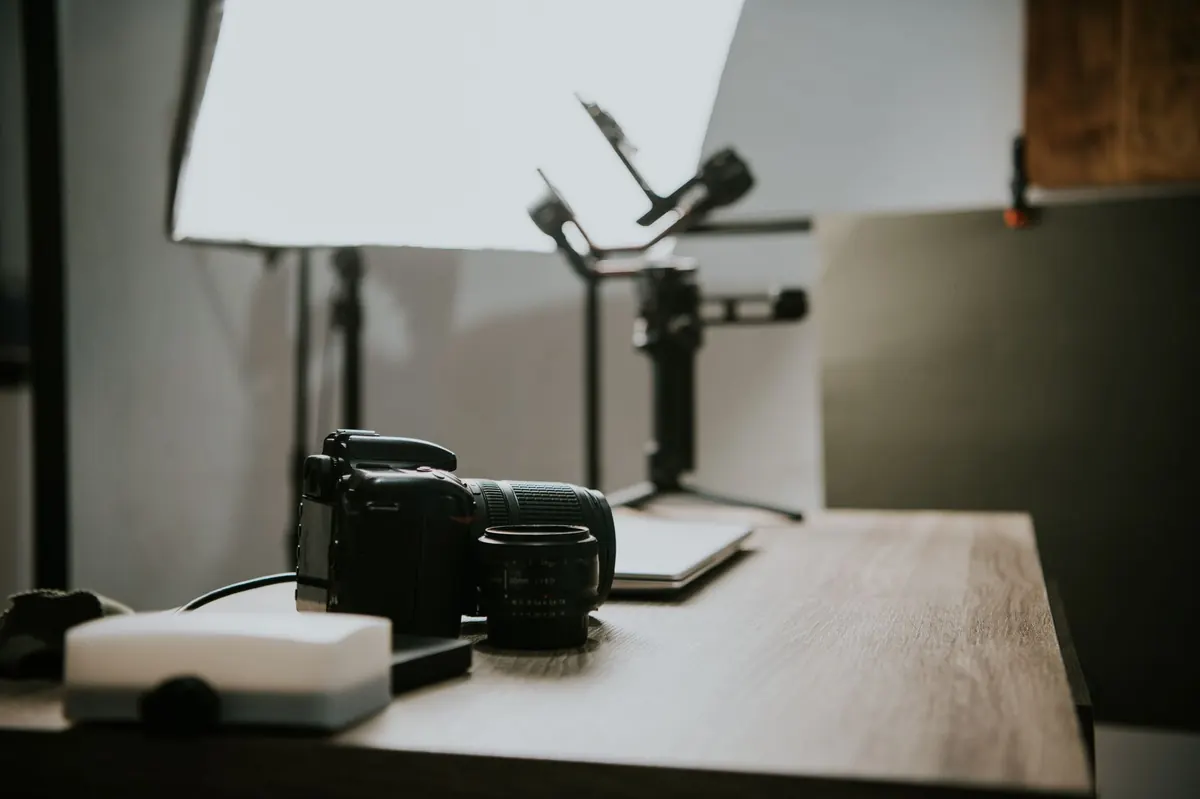
Photo: Amar Preciado / Pexels